
Browse recent publications, explore project-linked papers, and view our growing academic output.

Diagnosis of acute aortic syndrome is challenging and associated with high perihospital mortality rates. The study aim was to evaluate current pathways and understand the chronology of acute aortic syndrome patient care.
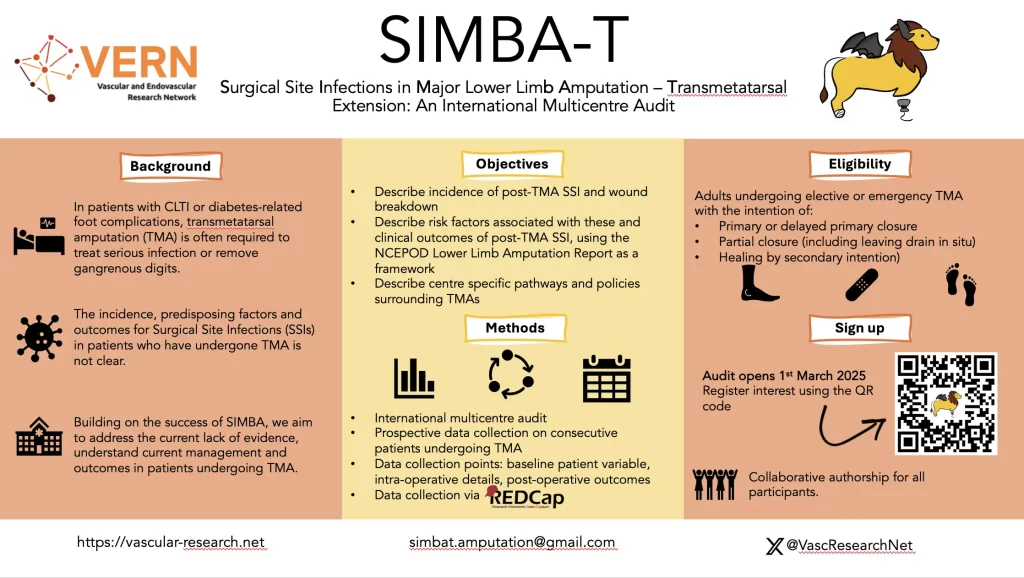
An international multicentre audit (SIMBA-T) designed to quantify surgical site infection rates and identify risk factors following major lower limb amputation with transmetatarsal extension.

The frequency, operative management, and outcomes for patients with traumatic vascular injury in the UK are unknown. The Vascular Interventions and Surgery in Trauma Audit (VISTA) aimed to describe the contemporary landscape of UK vascular trauma.
Diagnosis of acute aortic syndrome is challenging and associated with high perihospital mortality rates. The study aim was to evaluate current pathways and understand the chronology of acute aortic syndrome patient care.

This study aimed to capture practices of diabetic foot debridement and minor amputation in theatre, to compare practice with the IWGDF and GVG recommendations
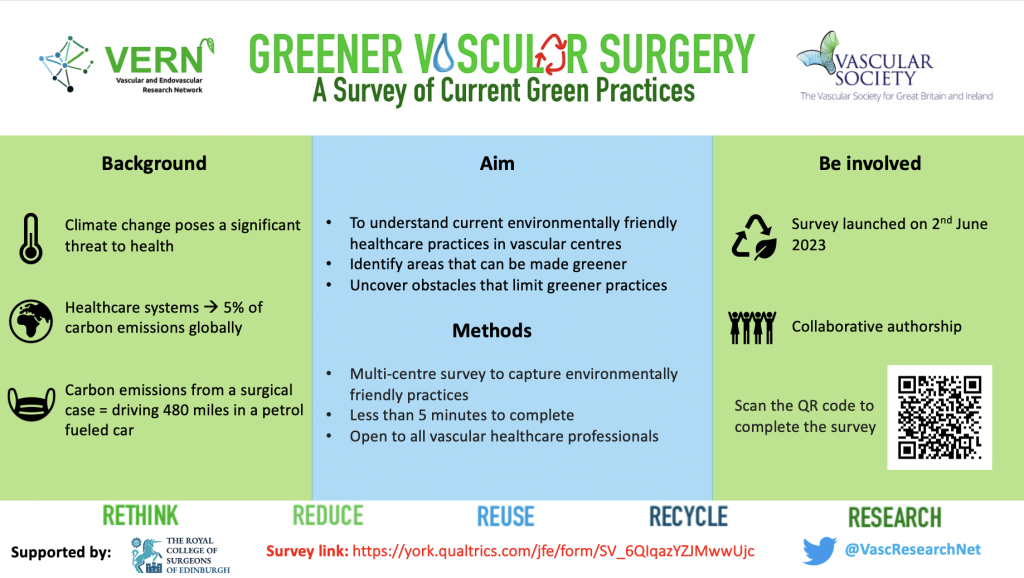
Climate change is an environmental emergency. With health care systems contributing to 5% of carbon emissions globally, this survey aimed to understand current green practices across vascular centers.

PERCEIVE is an international, multicentre prospective observational study including adult patients undergoing a primary major lower-limb amputation (MLLA) for chronic limb-threatening ischaemia (CLTI) or diabetes.
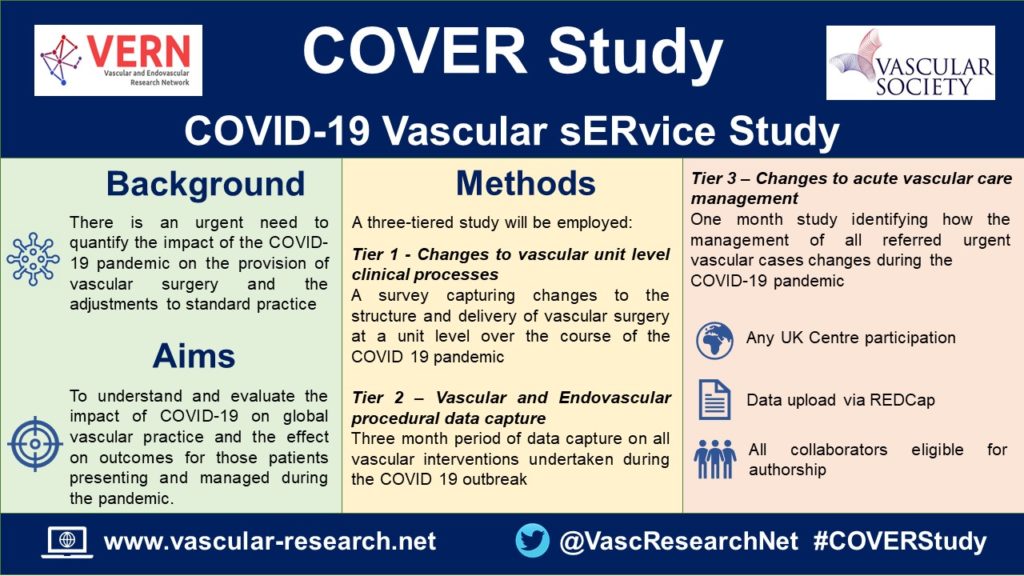
The VERN COVER study evaluates how the COVID-19 pandemic has impacted delivery of urgent vascular surgery across 30 UK centres, highlighting ongoing disruption to vascular services.

An international multicentre analysis shows perioperative COVID-19 infection and underlying comorbidity drive high mortality in vascular surgery patients.
This study investigates whether socioeconomic deprivation is associated with groin wound surgical site infection, mortality, and clinical outcomes following arterial intervention
Groin incision surgical site infections (SSIs) following arterial surgery are common and are a source of considerable morbidity. This review evaluates interventions and adjuncts delivered immediately before, during, or after skin closure, to prevent SSIs in patients undergoing arterial interventions involving a groin incision.

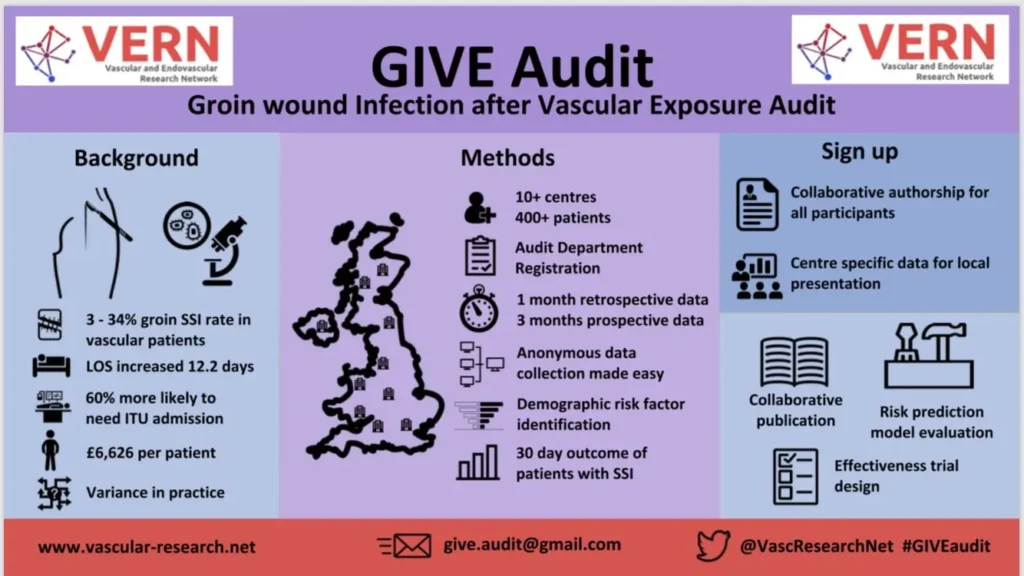
This international multicentre prospective cohort study quantifies the incidence, risk factors, and clinical impact of groin wound surgical site infections following femoral access in vascular surgery.
An international multicentre analysis shows perioperative COVID-19 infection and underlying comorbidity drive high mortality in vascular surgery patients.
An international multi-center observational study to identify global outcomes and decision making for vascular procedures during the pandemic.
An international multi-center observational study to identify global outcomes and decision making for vascular procedures during the pandemic.
An international multi-center observational study to identify global outcomes and decision making for vascular procedures during the pandemic.
This survey study evaluates current clinical practice in the use of antiplatelet and anticoagulant therapy for peripheral arterial endovascular interventions.
Protocol for an international multicentre prospective cohort study quantifies the incidence, risk factors, and clinical impact of groin wound surgical site infections following femoral access in vascular surgery.
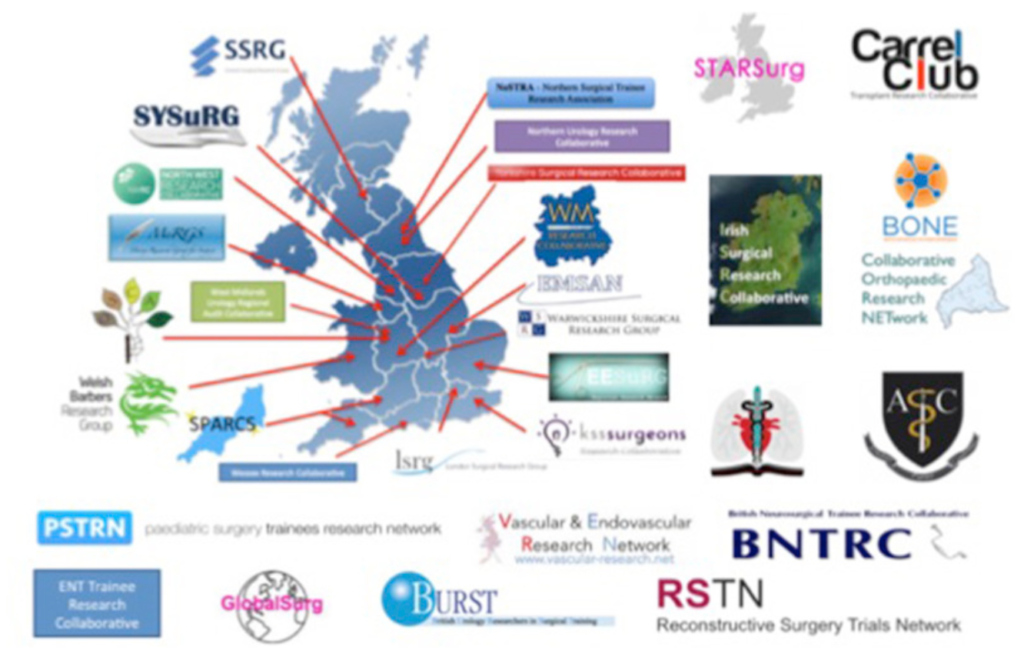
This study aimed to develop a flexible framework, inclusive of several aspects of academic practice for recommendation to the surgical SACs.

Previous research has suggested that patients with peripheral artery disease (PAD) are not offered adequate risk factor modification, despite their high cardiovascular risk. The aim of this study was to assess the cardiovascular profiles of patients with PAD and quantify the survival benefits of target-based risk factor modification
The risk of cardiovascular events and death in patients with abdominal aortic aneurysms (AAA) is high. The aim of this study was to assess cardiovascular risk reduction in patients with small AAA.
An international multicentre analysis shows perioperative COVID-19 infection and underlying comorbidity drive high mortality in vascular surgery patients.

Get Involved
Do you have a vascular research project you want to bring to life
Send us your project here
Powered by Elementor